Vector Functions And Space Curves
(requires JavaScript)
-
Find the domain of the vector function .
-
FindThe limit does not exist because diverges to infinity as tends to from above.
-
Sketch the curve given by equation and indicate the direction in which increases.
-
Sketch the curve given by equation and indicate the direction in which increases.
-
Sketch the curve given by equation and indicate the direction in which increases.
-
Find a vector equation and parametric equations for the line segment joining and .Vector equation: .
Parametric equations: , , , where . -
Match parametric equations with the given graphs. Explain.
- .
- .
- .
- .
- .
- .
I.
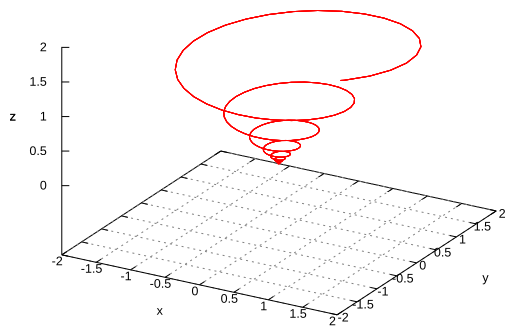 II.
II. 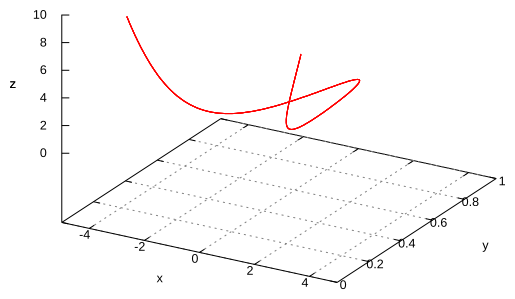
III.
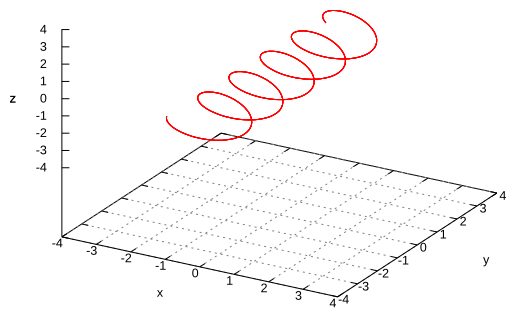 IV.
IV. 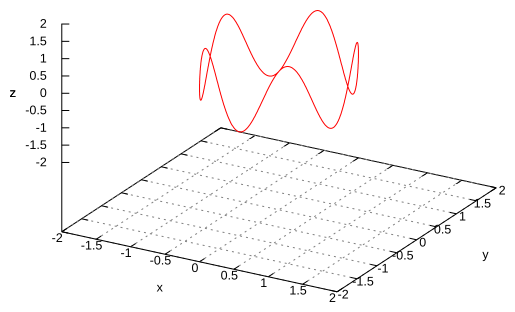
V.
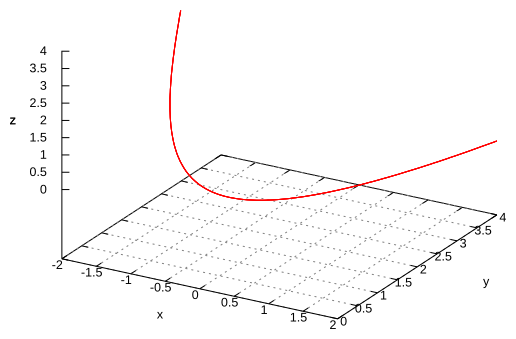 VI.
VI. 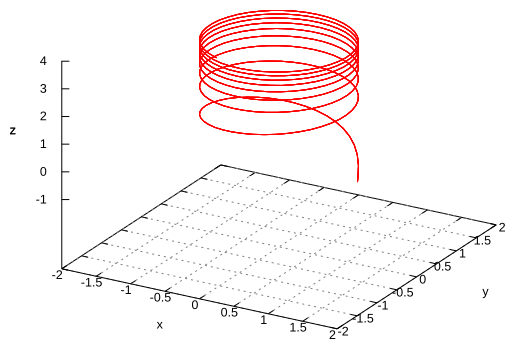 III, V, II, I, IV, VI.
 -
Use a computer to graph the curve given by the equation .
-
Two neutrons travel along the space curves and . Will they collide? Do their paths intersect?No collision; intersections at and .